
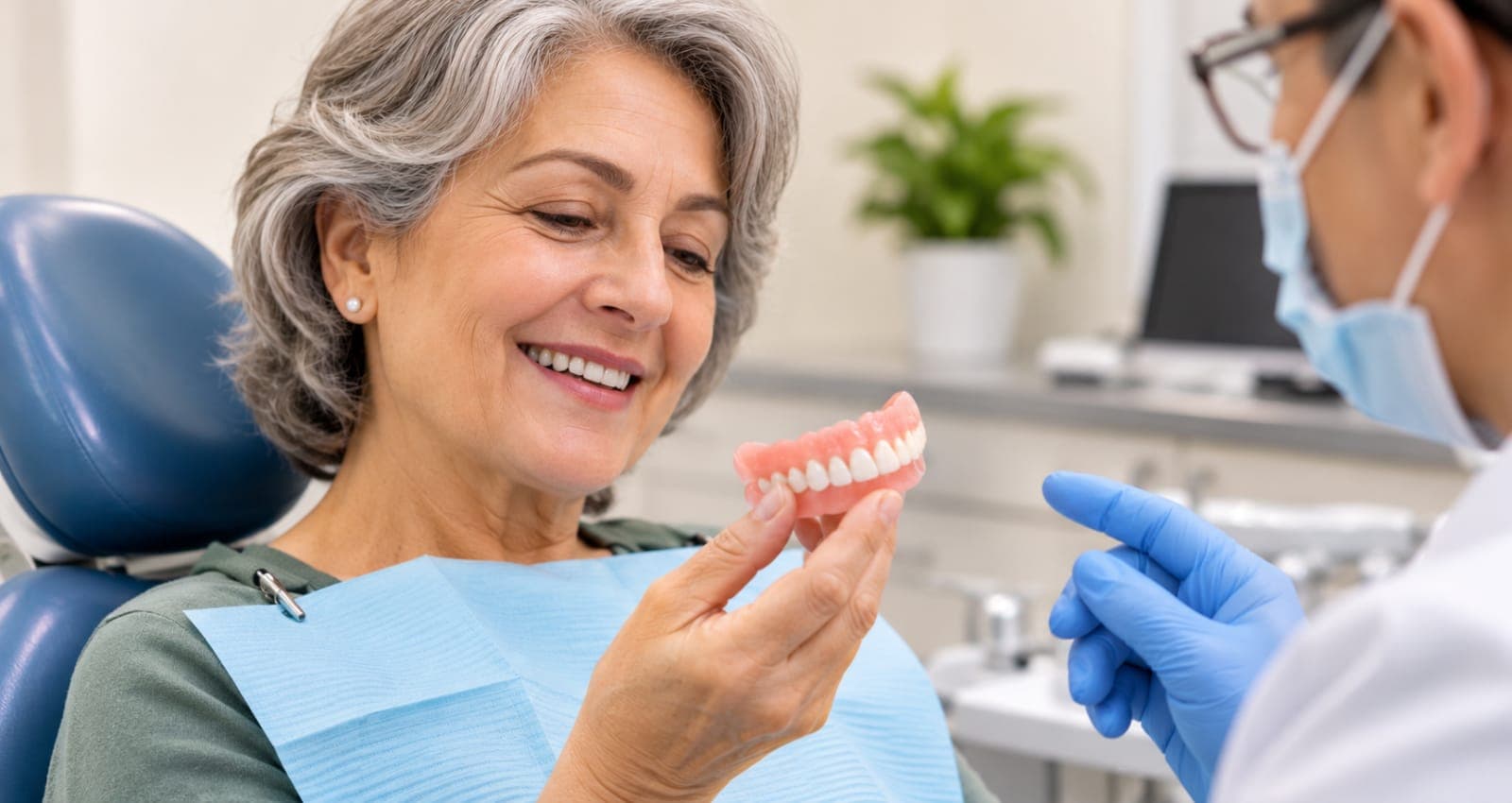
An acrylic denture is a removable dental prosthesis. It is made with a base of acrylic resin that supports artificial teeth.
Dentists recommend acrylic dentures to replace several missing teeth or an entire arch. Their success has multiple factors such as material, fit, bite, oral health, and ongoing maintenance.
Understanding these factors helps patients know what to expect and helps dental teams plan for a suitable restoration.
W here is an Acrylic Denture used ?
The resin base used in the Acrylic Dentures is designed to rest against the oral tissues and follow the contours of the patient's mouth.
Acrylic may be used in:
- Complete dentures: Replace all teeth in the upper or lower arch.
- Partial dentures: Replace some missing teeth while fitting around remaining natural teeth.
The design depends on the patient's oral condition, the number and position of missing teeth, and the treatment plan established by the dentist.
Why Are Acrylic Dentures Used?
Acrylic dentures can offer practical benefits in removable prosthetic treatment.
They can replace multiple missing teeth
A complete or partial denture helps restore the appearance of a dental arch and support everyday functions such as speaking and eating. The result depends on the quality of the fit, the patient's adaptation, and the condition of the supporting tissues.
They allow adjustments and repairs
Acrylic dentures may be adjusted or repaired when clinical circumstances permit. For example, changes in the mouth can affect how a denture fits over time. A dentist decides whether an adjustment, reline, repair, or replacement is appropriate.
They can be designed for different clinical needs
Acrylic dentures are not one-size-fits-all appliances. Their shape, tooth arrangement, and extension are planned around the patient's anatomy and treatment requirements. Partial dentures also need to account for the remaining natural teeth.
What Affects the Fit and Comfort of an Acrylic Denture?
A denture needs to fit the patient's mouth and work with their bite. Several factors influence its performance.
Oral anatomy: The shape of the ridge and the condition of the oral tissues affect support and retention. Changes in the ridge over time may alter the fit.
Impressions or digital records: Accurate records help the dental team communicate the contours of the mouth. The dentist selects the appropriate method based on the case and available workflow.
Bite and tooth arrangement: The way the upper and lower teeth meet can affect comfort and stability. The dentist evaluates the bite and requests adjustments when needed.
Patient adaptation: New dentures may feel unfamiliar at first. Speaking and eating can take practice. Persistent soreness, looseness, or difficulty chewing should be assessed by a dentist rather than ignored.
How Should Patients Care for Acrylic Dentures?
Daily care helps keep dentures clean and supports oral health.
- Remove and clean the denture as directed by the dentist.
- Use a denture brush and a suitable cleaning product. Avoid abrasive toothpaste unless the dentist recommends it.
- Rinse the denture after meals when possible.
- Clean the gums, tongue, and any remaining natural teeth.
- Follow the dentist's instructions about when to wear or remove the denture, including overnight.
- Keep regular dental appointments so the fit and condition of the denture can be checked.
Do not attempt to reshape or adjust a denture at home. If it cracks, causes persistent irritation, or becomes loose, contact the dental team.
When Might an Acrylic Denture Need Adjustment?
A denture may need professional attention if it starts rubbing, slips during speaking or eating, or no longer feels secure. Changes in the mouth can affect fit, even when the denture was initially comfortable.
A dentist can determine whether the issue requires a minor adjustment, a reline, a repair, or a new denture. Patients should not use household adhesives or try to alter the appliance themselves.
FAQs About Acrylic Dentures
How long does an acrylic denture last?
There is no single lifespan that applies to every denture. Wear, changes in oral anatomy, daily care, and the condition of the appliance all influence how long it remains suitable. Regular dental reviews help determine when it needs attention or replacement.
Are acrylic dentures comfortable?
They can be comfortable when properly designed and fitted, but adjustment may take time. Ongoing pain, sore spots, or instability should be evaluated by a dentist.
Can an acrylic denture be repaired?
Some cracks, fractures, or other problems may be repairable. A dentist needs to assess the damage and decide whether repair is appropriate or whether replacement would be a better option.
Can patients eat normally with acrylic dentures?
Patients may need time to adapt. Dentists often recommend starting with softer foods and gradually practising with a wider range of textures. If chewing remains difficult, the fit and bite should be checked.
Working With a Dental Laboratory
A well-made denture depends on clear communication between the dentist and the dental laboratory. Accurate records, the prescription, tooth selection, and relevant clinical details help guide fabrication. The dentist remains responsible for evaluating the fit and making any necessary clinical adjustments.
For dentists planning removable prosthetic cases, Laguna Dental Arts can be a point of contact for discussing removable denture requirements and the information needed for laboratory fabrication. Sharing the case details clearly helps the laboratory understand the intended design and workflow.
Ultimately, an acrylic denture should be assessed as part of the patient's overall treatment plan. With careful planning, professional follow-up, and consistent care, it can serve as a practical removable option for replacing missing teeth.


