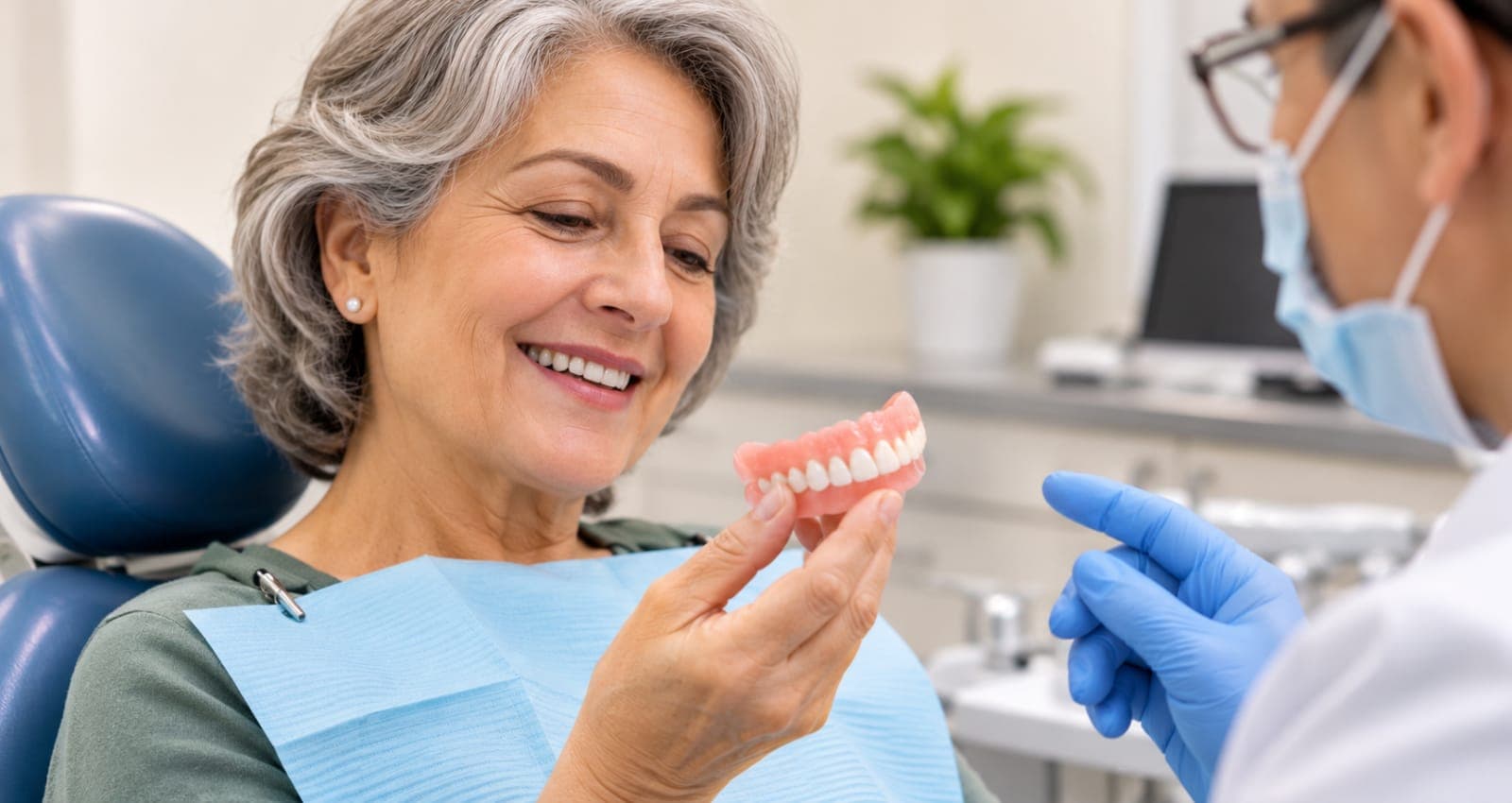
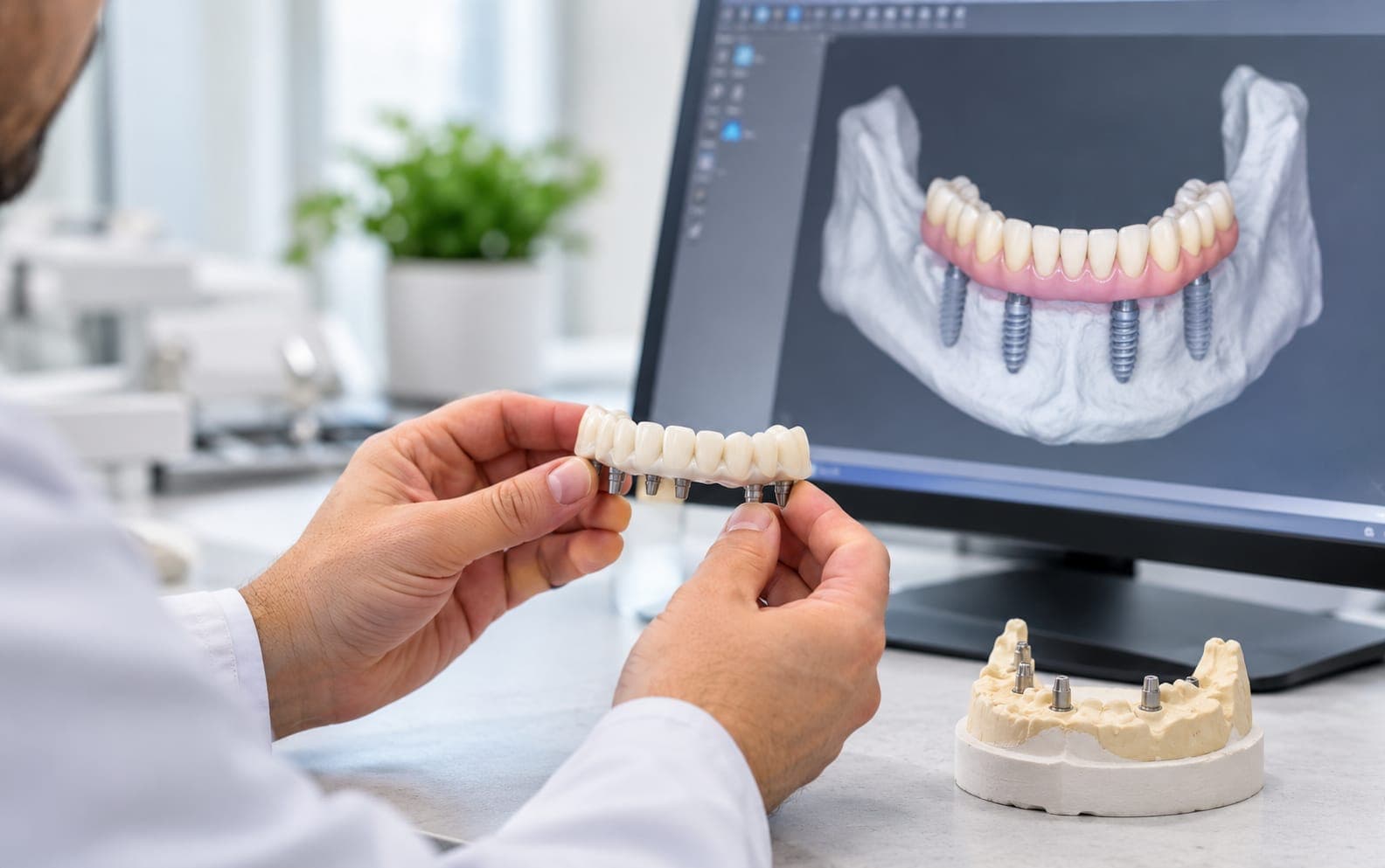
Full-arch implant restorations rely on the balanced confluence of clinical planning, implant positioning, prosthetic design, and laboratory fabrication. Each stage has a direct influence on the next, making communication especially important when several implants support a single restoration.
For dentists evaluating a full arch dental lab , the priority should not be fabrication alone. The laboratory must understand the restorative plan, work from complete records, and coordinate design decisions before manufacturing begins.
Understanding what this process involves helps practices prepare cases more effectively and identify a laboratory partner suited to complex restorative workflows.
Why Full-Arch Cases Need a Coordinated Workflow
Unlike a single crown, a full-arch restoration requires coordinated planning of implant positions, restorative space, occlusion, tissue contours, and prosthetic design.
A change in one area has the possibility to affect another. For example, implant angulation can influence screw-channel positioning, while available restorative space can affect material selection and prosthetic design.
A coordinated workflow helps the dentist and laboratory review these details before production, giving them the chance to clarify questions before they become manufacturing delays.
Start With Complete Case Records
Accurate records provide the foundation for full-arch planning. Depending on the case, the laboratory may need digital scans or impressions, opposing arch records, bite information, photographs, implant component details, and a completed prescription.
The records should communicate the intended restoration and relevant clinical requirements. Missing information can require additional clarification before the design progresses.
Dentists should also confirm that submitted files and implant components are compatible with the planned workflow. When the clinical objective, records, and prescription align, the laboratory has a clearer basis for designing the restoration.
Material Selection Depends on the Case
Full-arch restorations can use different materials, including zirconia and polymethyl methacrylate, commonly called PMMA. These materials cater to different scenarios depending on the intended restoration and treatment stage.
Zirconia may be used for definitive full-arch restorations where its material properties and design suit the case. PMMA can be used for provisional restorations and prototypes, depending on the clinical plan and product indications.
The decision should account for restorative space, functional demands, esthetic requirements, maintenance considerations, and the intended service of the prosthesis. Material selection should follow the case requirements rather than a one-material-fits-all approach.
Why Design Review Matters Before Manufacturing
A digital workflow allows the laboratory to develop prosthetic design based on the submitted records. However, digital tools do not remove the need for careful review.
The team needs to evaluate the proposed contours, implant interfaces, screw-access positions, occlusion, and available space against the prescription. The dentist may also need to approve a design before the laboratory moves forward.
These checkpoints serve as a confirmation of alignment of objectives. Additionally, it helps the clinical team and laboratory confirm that they are working toward the same restorative objective.
What Should Dentists Look for in a Full Arch Dental Lab?
When choosing a full arch dental lab , consider more than its equipment or advertised turnaround time.
Ask whether the laboratory:
- Accepts your digital scanner files and traditional records when needed.
- Supports the implant systems and components used in your practice.
- Offers suitable zirconia and PMMA workflows.
- Reviews designs against the submitted prescription.
- Provides technical support when case details need clarification.
- Performs quality checks before delivery.
These questions help dentists understand whether the laboratory can support the practical demands of full-arch cases.
Full-Arch Support at Laguna Dental Arts
Laguna Dental Arts offers full-arch workflows using zirconia and PMMA, including All-on-4 and All-on-6 options. Its team reviews submitted records and coordinates design checkpoints before production progresses.
Dentists can explore the full-arch restoration service to review available workflows, material options, and case submission requirements.
For each case, the laboratory needs a completed prescription, relevant scans or impressions, opposing records, bite information, and applicable photographs or component details. The team can also discuss material and workflow questions before fabrication begins.
Frequently Asked Questions
What does a full arch dental lab do?
A full-arch laboratory designs and fabricates prosthetic restorations that replace an entire dental arch. Its work may involve digital planning, material selection, design review, manufacturing, finishing, and quality checks.
What materials are used for full-arch restorations?
Zirconia and PMMA are among the available materials. Their suitability depends on the intended use, clinical requirements, and the manufacturer's instructions.
What records should dentists submit ?
Requirements vary by case, but commonly include a prescription, scans or impressions, opposing arch, bite record, photographs, and relevant implant component details.
Why is communication important in full-arch cases?
Clear communication helps the dentist and laboratory clarify design requirements, review important decisions, and address missing information before production advances.
Plan the Workflow Before the First Component Is Made
Successful full-arch treatment depends on coordination between clinical planning and laboratory execution. Complete records, appropriate materials, design review, and clear communication help keep each stage aligned.
Choosing a full arch dental lab that supports this process gives dentists a structured way to manage complex restorative cases from submission through fabrication and delivery.